
Kokugikan 1.0
The Home of Sumo

The Dai Nippon Sumo Kyōkai did not receive its charter until 1925 (Taishō 14). It’s first official bashō (tournament) was in February of 1927 (Shōwa 2). However, Japan’s government began construction of the building that became the geograpical and administrative center of Sumo, Tokyo’s Kokugikan (National Sport Pavilion), in 1906. Construction was finished in 1909.
The building was necessary. Sumo had two major locations in Tokyo before 1925, and had local Kakuriki Kyōkai (rikishi associations) in major cities all over Japan. The sport was decentralized. Most, if not all, sumo contests were held at Buddhist Temples or Shintō Shrines. Tournaments were not regularly scheduled events. Mostly they were held in conjunction with local festivals. Rules were not standardized, and training systems - well, anyone mildly familiar with the stable system currently in operation will not be surprised to learn that training systems showed what I will charitably call significant variation, differing by location and oyakata personal belief systems. By 1768, in Edo (later Tokyo), sumo was settling into some patterns. One was the location of tournaments in Ryōgoku. I went there this July with a close friend, fellow substack author Honolulu Blotter, to see it for myself.
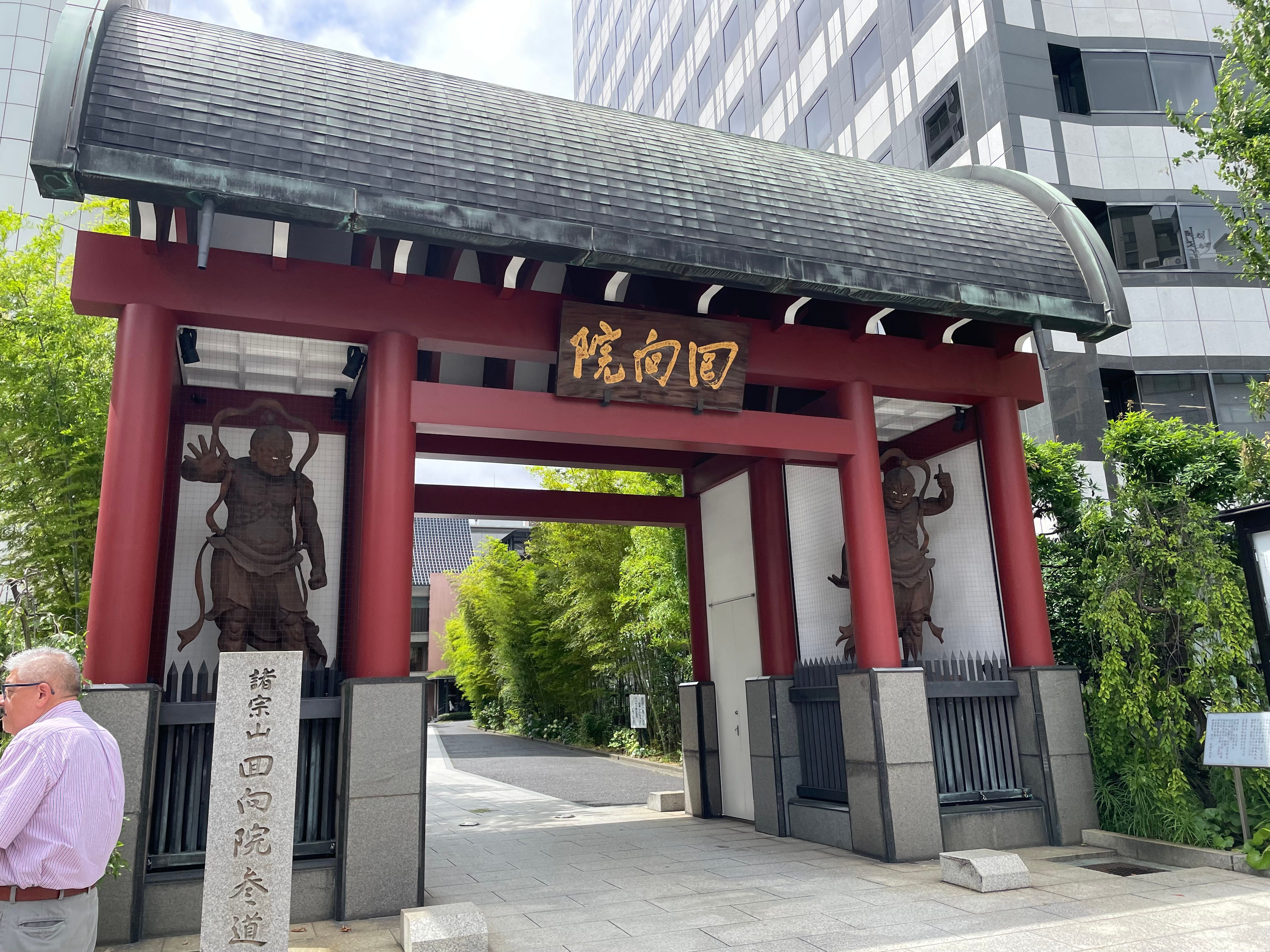
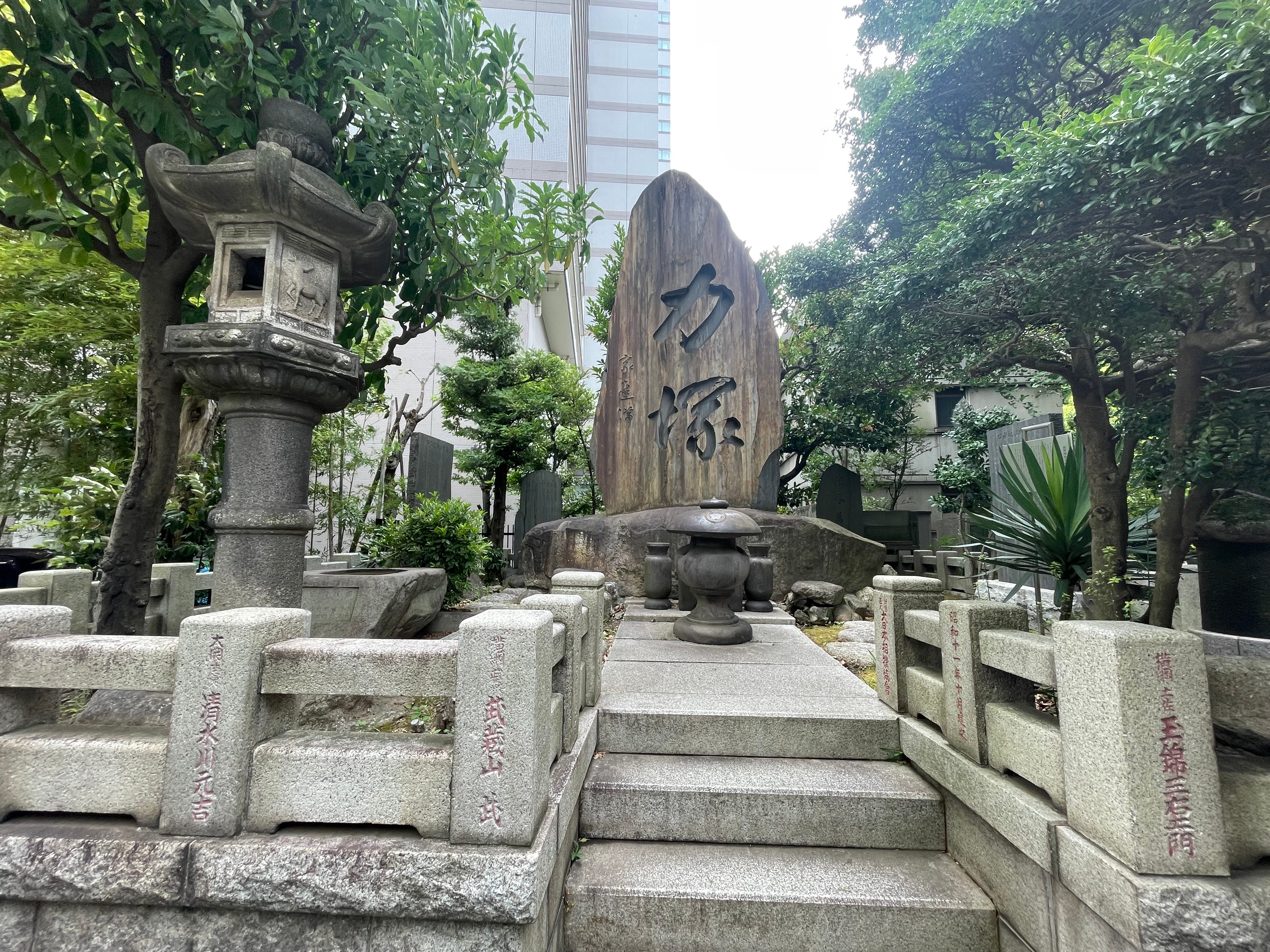
Ryōgoku had space for a (relatively permanent) temporary structure for seating and an outdoor dohyō at it’s Ekōin Temple, (full name Shoshūzan Muen-ji Ekō-in 諸宗山 無縁寺 回向院). Ekōin is a Jōdo-shū (Pure Land) Buddhist temple. It was built by a shōgun: Tokugawa Ietsuna, after a devastating fire in 1657 which destroyed more than 60% of Tokyo, and probably killed more than 100,000 people. From 1833-1909, it was the only venue used for sumo in the late Tokugawa and Meiji Periods. Ekōin had the space, and it had the Chikara Zuka - a sacred stone that confers strength where sumo rikishi, especially in their early years, go to pray and gather the resilience they need to compete.


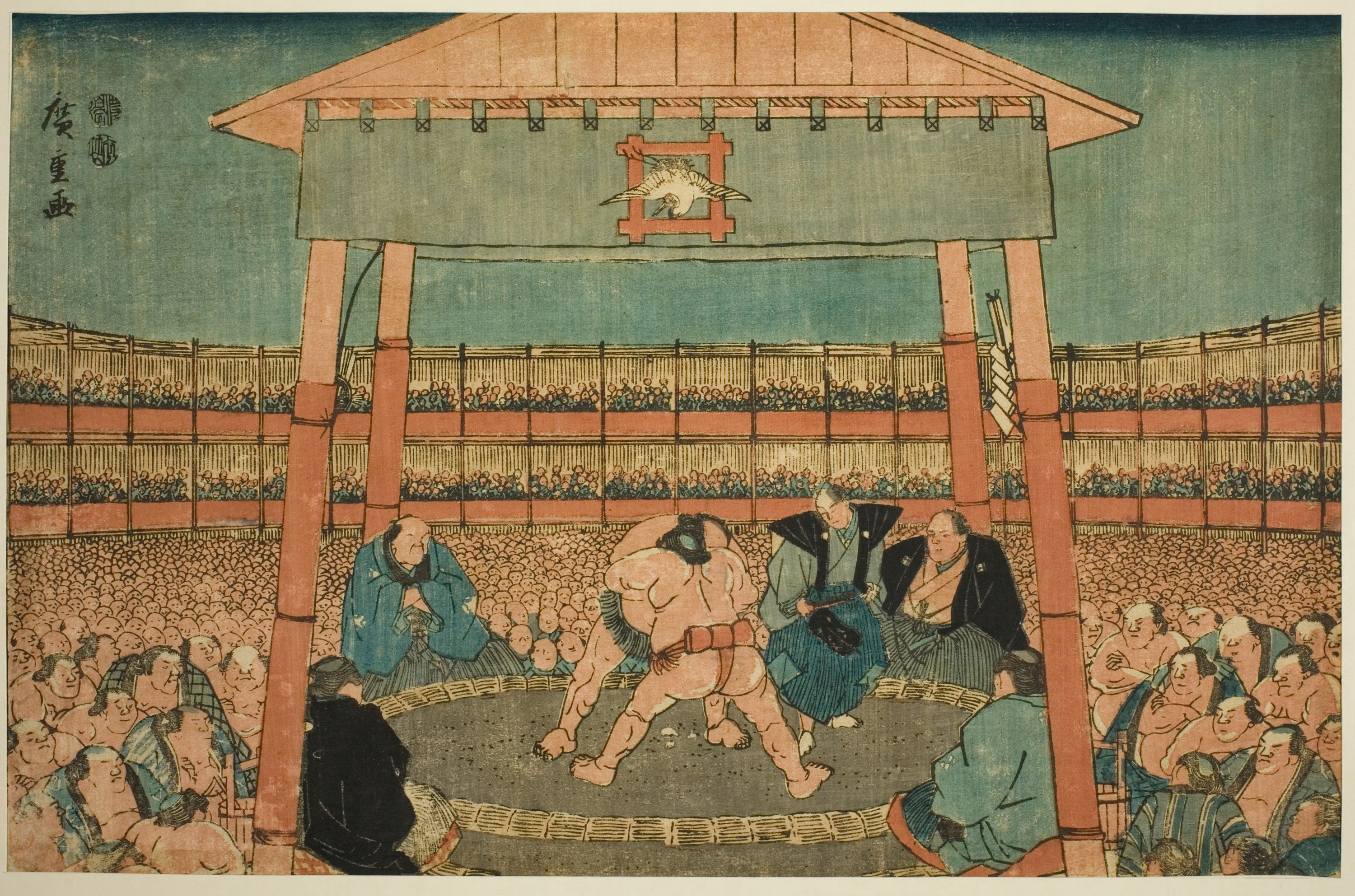
However, Ekōin was not large enough to accommodate the growing crowds. It's structures were not built to last, and the venue was open to the sky, making weather a factor in both competition and attendance. During the Meiji Period, Japan’s modernization also meant that sumo was becoming more of a secular sporting event, and less associated with local religious festivals and beliefs. It was also becoming, increasingly, a money-making affair. So the government decided to construct a dedicated pavilion for sumo, right next door to Ekōin in Ryōgoku. In 1906 they commissioned construction of the “Great Iron Umbrella” - the first Kokugikan. It is about 300 meters to the south and west of the current Kokugikan. It was built with an iron frame supporting an iron dome with concrete block walls. Completed in 1909, this very modern, Western-style Kokugikan had towers with Orthodox style onion domes and French style mansard roofs. It could seat 13,000 indoors with what appears to be a pretty good view of the dohyō - the 5.4m diameter circle where all the action happens. The dohyō sat under an irimoya-zukuri (a Chinese style) roof held up by pillars in this original building.
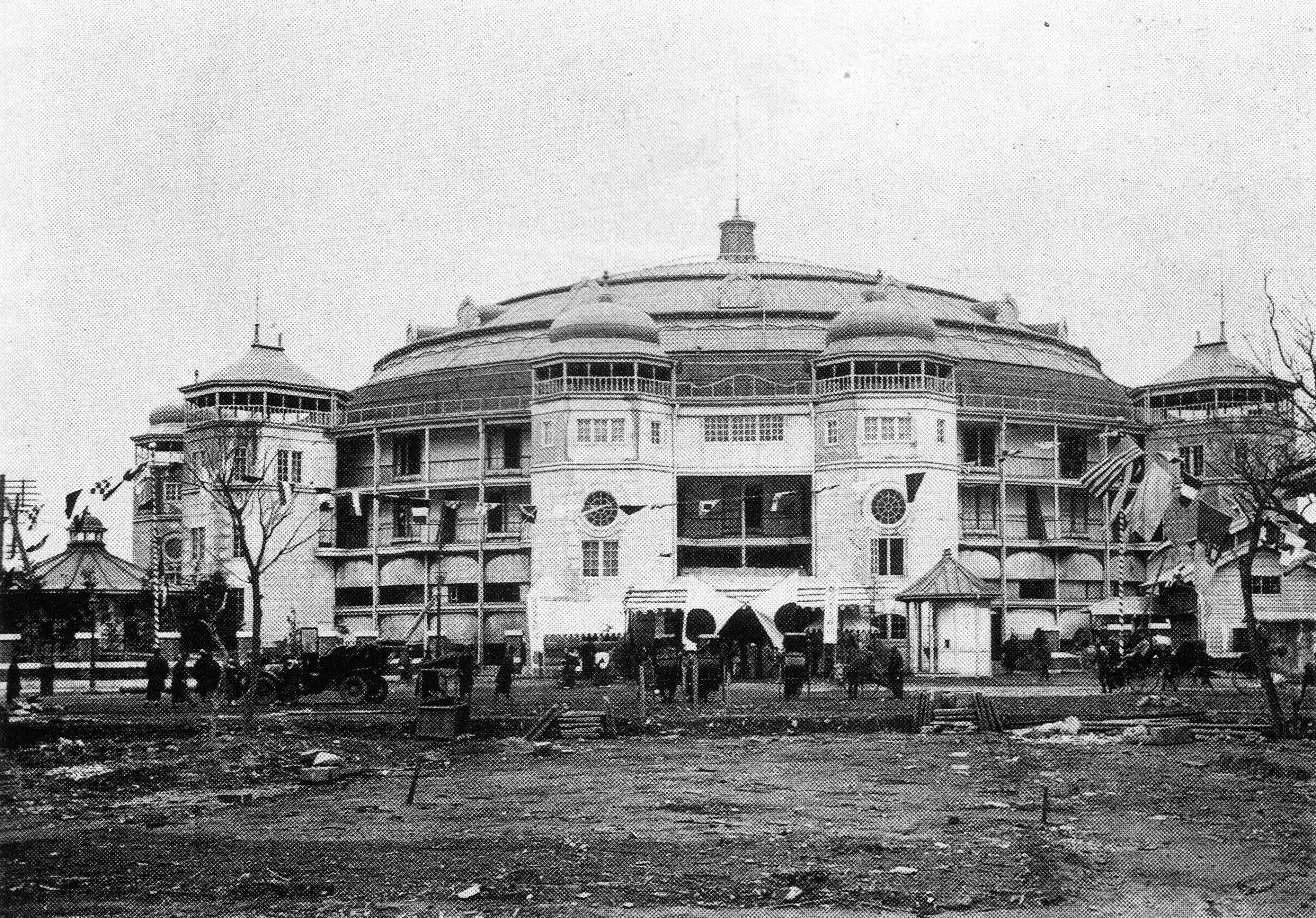
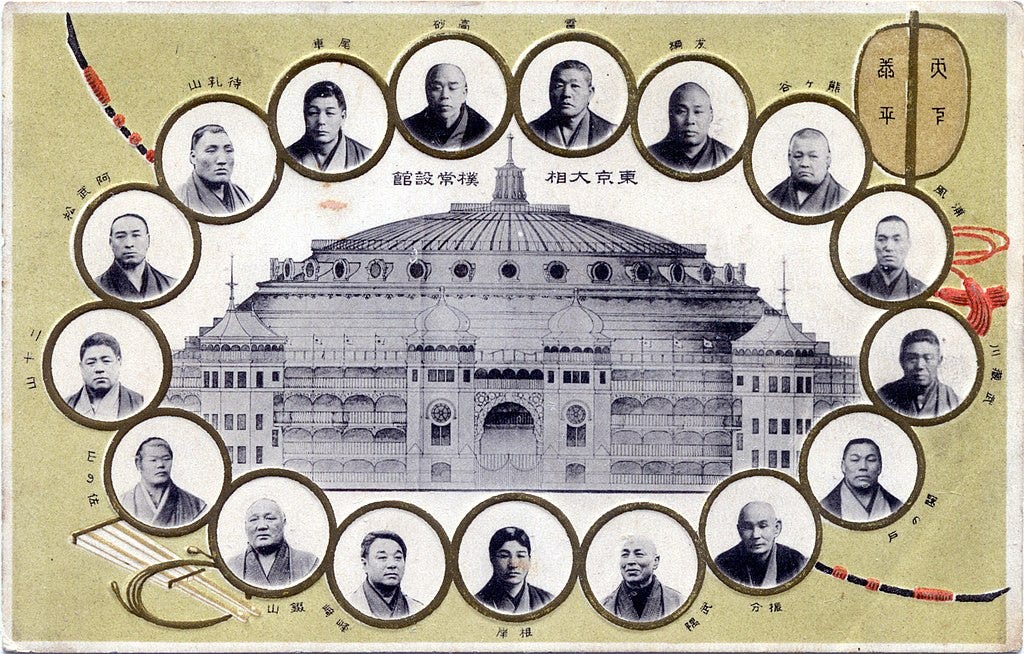
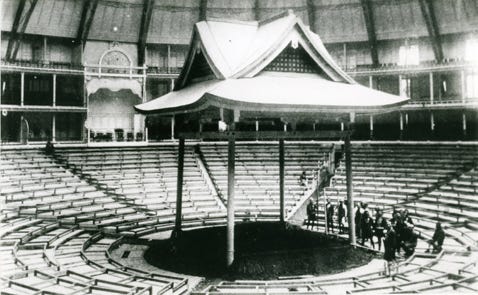
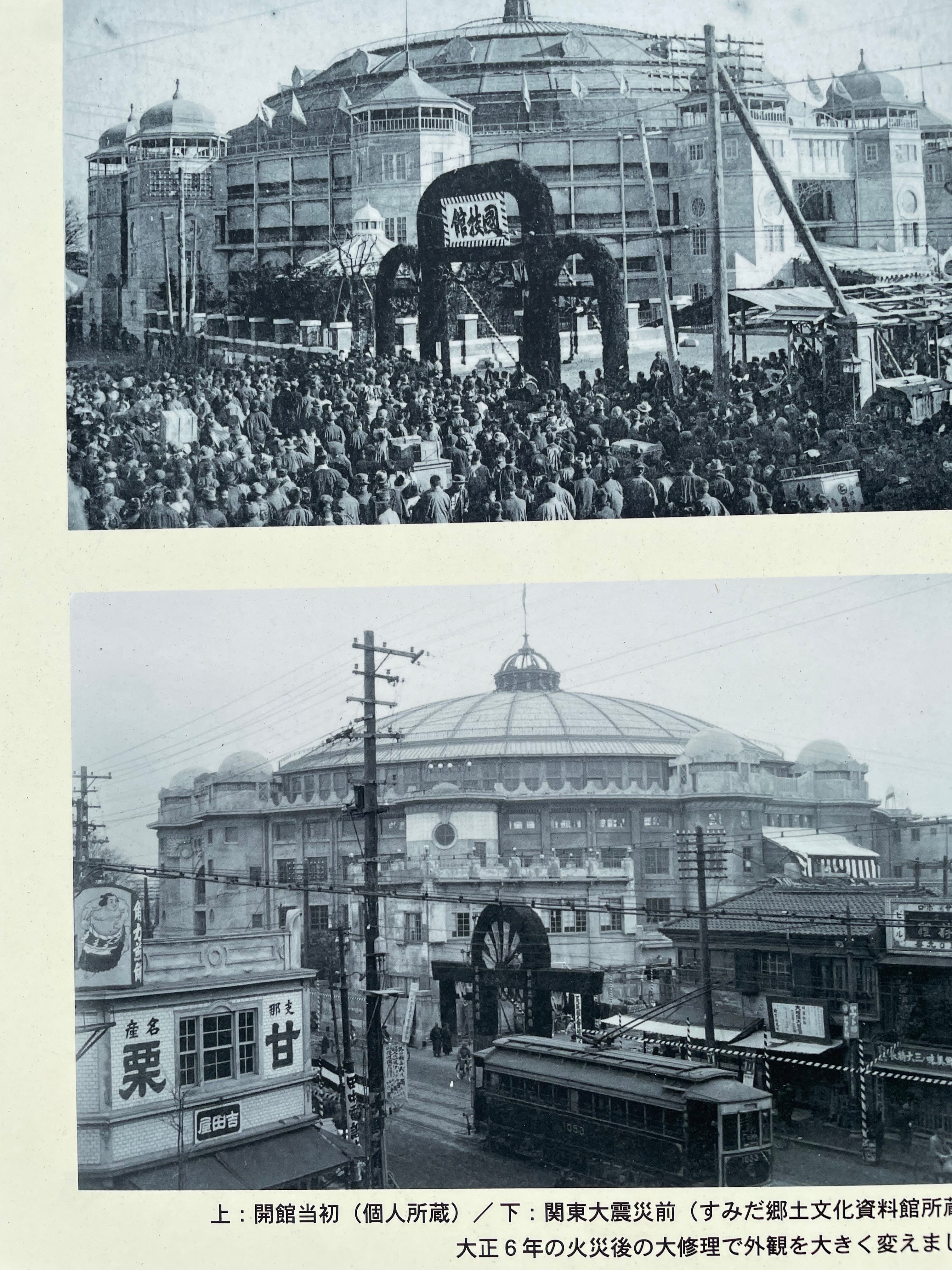
I am always leery of the question “where would you go if you could visit the past?” My usual professional answer is that we’d probably find any time in the past very difficult to understand or live within. Privately, as sumo fan, I would love to time travel to watch sumo in the first Kokugikan. It is a narrow time window, though. Tough to hit even for Doctor Who. Kokugikan 1.0 was destroyed in 1917, only 8 short years after it’s completion. It had to be completely torn down. While it was being rebuilt from the ground up, sumo was moved to Yasukuni shrine until the new Kokugikan was ready in 1920.
It is clear that the second Kokugikan was different. Still in Ryōgoku next door to Ekōin, it could hold up to 20,000 people. Architect Kingo Tatsuno retained the round structure, reinforced the iron dome with zinc, and topped the towers with with domes rather than onion domes and mansard roofs.
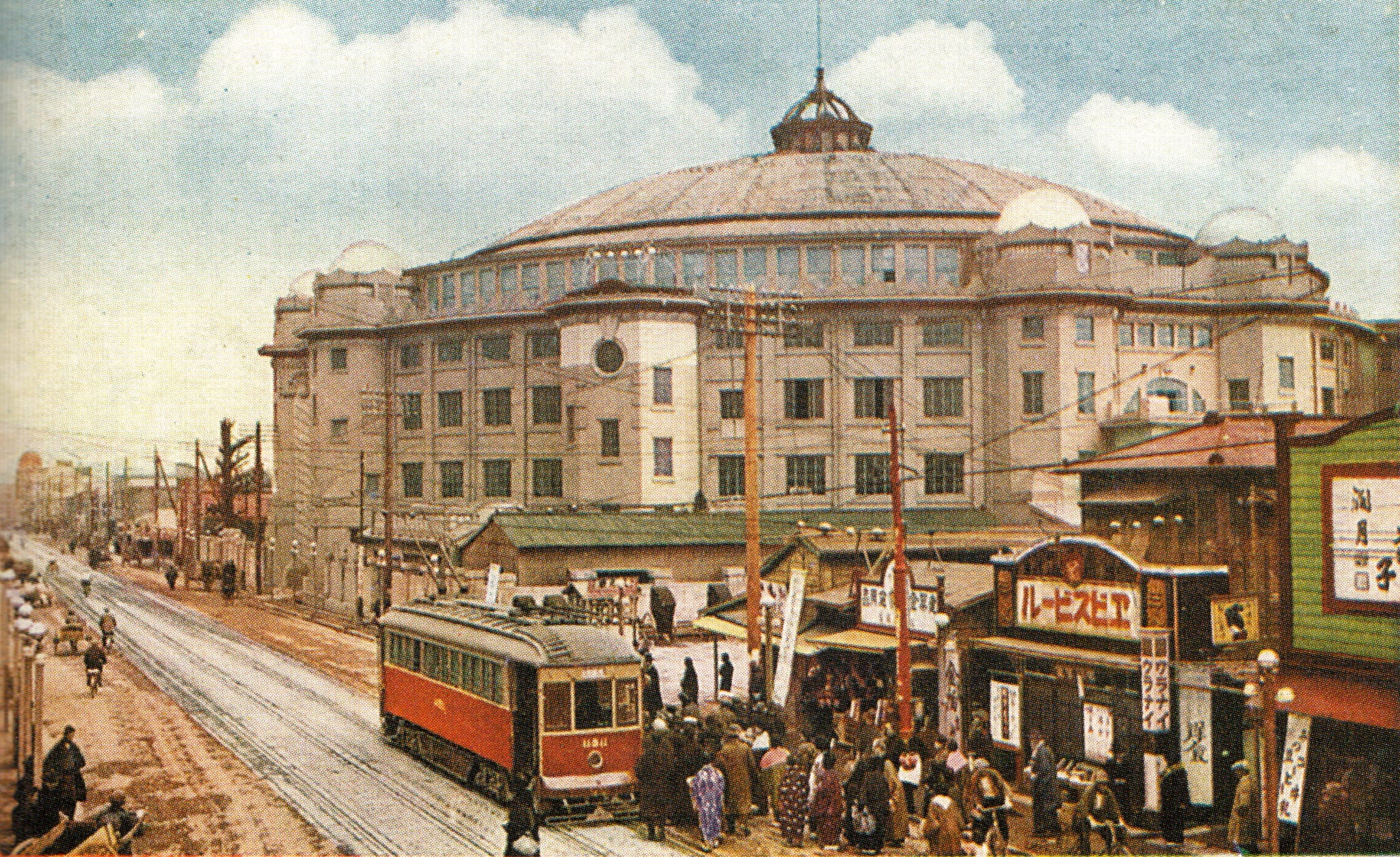
The history of this second kokugikan is a tragic one; or perhaps it is better described in more wabi-sabi terms as beautiful tragedy. Either way, it deserves its own post. Thanks for reading.
Ikeda, Masao. Sumō Hyakunen No Rekishi : Shashin Zusetsu (100 Years of Sumo History in Pictures). Nihon Tosho Sentā, 2014.
Seidensticker, Edward. Low City, High City: Tokyo from Edo to Earthquake. 1st ed. A Borzoi Book. Knopf, 1983.
Silverberg, Miriam Rom. Erotic Grotesque Nonsense : The Mass Culture of Japanese Modern Times Asia Pacific Modern. University of California Press, 2006.
Tourist Map of Tokyo : Showing All Points of Interest to Tourists, Also Electric Tram Lines with Names of All Car-Stops / Issued by Japan Tourist Bureau. Japan Tourist Bureau;, 1923. American Geographical Society Library, University of Wisconsin-Milwaukee Libraries. https://collections.lib.uwm.edu/digital/collection/agdm/id/34143/.
Wakamori, Tarō. Sumō No Rekishi to Minzoku (Sumo History and The People). Kōbundō, 1982.
Yamamura Eiji. The 300 year history of Sumo, Honjo and the Magnetism of Ryogoku, through an Economic lens . Nippon Hyōronsha, 2025.
I had lost interest in sumo after the end of the Hanada Gang vs. the Hawaiian Connection era, but your essay taught me a lot about the Kokugikan. Looking forward to part 2!
I’m glad you captured our friend the cat! That was serendipity, but at the same time no coincidence. I’ll be back to Tokyo in May. If you can, let’s go back to Ryogoku this time as spectators in the current Kokugikan. We may have three Yokozuna by then. Thanks for the great post, Sensei!